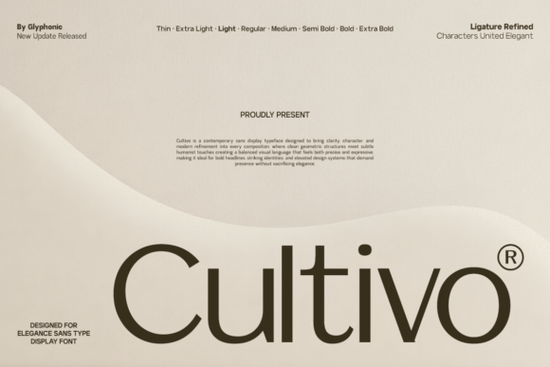
If you’re searching for a clean sans serif font that works for branding and tech interfaces, Cultivo Font might be the missing piece in your toolkit. Designed with a balance between geometric precision and soft humanist details, it brings clarity without feeling cold. Whether you’re building a logo, editing a magazine spread, or setting up a website header, Cultivo keeps your text readable and your message strong.
Who is Cultivo really for?
This font suits a wide range of creatives. If you’re a graphic designer working on brand identities, you’ll appreciate its clean lines and polished ligatures. Print-on-demand sellers can use Cultivo for minimalist T‑shirt quotes or product labels that need a modern edge. Small business owners building a website from scratch will find it reliable for headlines and navigation buttons. Even crafters designing digital planners or scrapbook titles can benefit from its simple elegance.
While Cultivo is a contemporary sans display face, it pairs well with other styles. For a softer contrast, try combining it with a rounded sans serif like Brisca Font. If you need a playful headline alongside Cultivo’s calm body text, Summer Marker Font can add a hand‑drawn feel. The goal is to find a balance that matches the mood of your project.
What makes Cultivo different from other sans serifs?
Many sans serif fonts feel either too rigid or too casual. Cultivo walks the middle line. Its character spacing is refined but not cramped, and the ligatures are elegant without calling too much attention to themselves. This makes it ideal for high‑end tech interfaces where every pixel matters, or for editorial headers that need to stand out without shouting.
Another difference is the subtle humanist touch. The curves in letters like “a” and “e” feel warm, but the overall structure stays clear. That’s why Cultivo often works better than a strict geometric sans for longer headlines or subheadings readers can move through the text more comfortably.
Can I use it for print-on-demand products?
Absolutely. Cultivo’s stroke weights are consistent, so it prints cleanly on both light and dark garments. It works especially well for minimalist designs, motivational quotes, or modern typography posters. If you’re selling digital templates, Cultivo gives your product a premium look without being flashy. For a more decorative alternative, you might also look at Kohilo Font, which offers a distinct rounded style.
How does Cultivo perform in small sizes?
Although it’s labeled as a display typeface, Cultivo holds up surprisingly well at smaller sizes like app menus or product descriptions. The open counters and balanced spacing keep letters distinguishable even at 12–14 pixels on screen. That said, for body text on a website, you might want to pair it with a neutral sans serif like Edition Font, which is designed specifically for long‑form reading.
Is it easy to pair with other fonts?
Yes. Cultivo’s neutral personality makes it a team player. Use it for headings and combine it with a script for accents, or match it with a more casual sans for a friendly look. For example, Perfect Lemonade Font brings a hand‑drawn, sunlight vibe that contrasts nicely with Cultivo’s polished structure. Just keep one font for headlines and the other for body text to avoid visual noise.
What kind of projects benefit most from Cultivo?
The font really shines in branding, editorial design, and UI work. For a brand identity, use Cultivo to set the tone for your logo, business cards, and website. In editorial design, it creates strong magazine covers or chapter titles. For UI, its clarity helps users scan buttons and headers quickly. Small businesses selling digital products, like planners or printable art, can use Cultivo to make their listings look professional and trustworthy.
Quick checklist before you download Cultivo:
- Check the license – Make sure it covers your intended use (personal or commercial). Creative Fabrica usually includes a standard commercial license.
- Test it in context – Try Cultivo in your actual design software, not just the preview page. Resize it, apply tracking, and see how it reads at different weights.
- Think about pairing – Decide which secondary font you’ll use for body text or accents. Keep it simple: one display, one text font.
- Evaluate readability – If you plan to use it for small text, test a paragraph at 14px. Make sure letters like “l” and “1” are distinct.
- Consider color – Cultivo’s neutral forms work well in both dark and light color schemes. Try it in your brand’s primary color to see if the contrast stays strong.
Next step: Download Cultivo Font from Creative Fabrica and drop it into a current project maybe a simple logo or a social media graphic. See how it handles kerning and spacing. Then try pairing it with one of the fonts mentioned above. You’ll quickly discover whether Cultivo fits your workflow or if you need something more expressive.
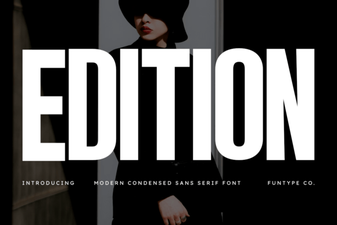 Edition Fonts: Design & Typography Projects
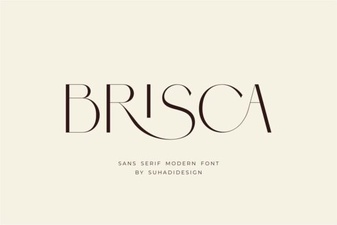 Brisca Font: Creative Typography for Design Projects
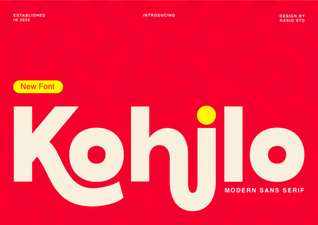 Kohilo Font: Perfect for Creative Projects
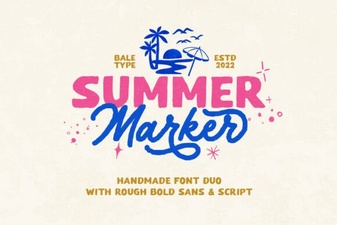 Best Summer Marker Fonts for Creative Projects
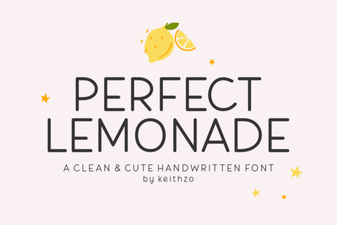 Fresh Font Designs Inspired by Perfect Lemonade Recipes
 Crafting Creativity with Unique Handmade Fonts